Keynote & Plenary Speakers
Honouring the Spirit of Water:
The Importance of Women’s Voices in Water Protection
Presenters: Taylor Galvin, Shaylee Cook (Brokenhead), Kakeka Thundersky (Winnipeg/Poplar River), Jory Thomas (Metis/Winnipeg), Jordan Thorsteinson (Sagkeeng/Winnipeg).
As part of this keynote address, Taylor Galvin will engage four youth water protectors in a panel dialogue including Shaylee Cook (Brokenhead), Kakeka Thundersky (Winnipeg/Poplar River), Jory Thomas (Metis/Winnipeg), and Jordan Thorsteinson (Sagkeeng/Winnipeg).
This keynote challenges the framing of water management while centering Indigenous knowledge systems and the visionary leadership of young Indigenous women. The session will explore what a water-honoring future looks like: one that listens to land defenders, water protectors, elders, land-users, and youth while building the movements of tomorrow. Panelists will share their personal relationships with water, and help set the conference tone by modeling collaborative, generational knowledge-sharing and uplifts the very voices that will lead our collective water future.
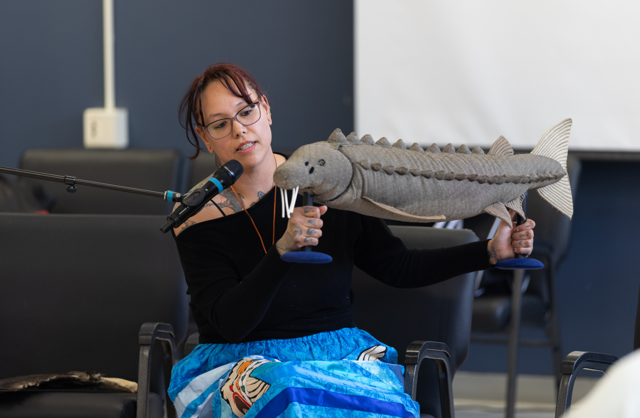
Taylor Galvin Ozaawi Mashkode Bizhiki (Brown Buffalo) is a proud Anishinaabe woman from Brokenhead Ojibway Nation and a member of the Sturgeon Clan. A graduate student at the University of Manitoba, Taylor’s Master’s thesis explores Lake Sturgeon conservation through Indigenous science, storytelling, and community-based knowledge. Taylor serves as the Brokenhead Wetland Ecological Reserve Chair and is the community coordinator for an Indigenous-led environmental monitoring project in Tataskweyak Cree Nation. A lifelong student of many Elders and Knowledge Keepers across Manitoba, Taylor walks in both worlds, using western and Indigenous sciences to guide her work in land guardianship, ceremony, and environmental protection.
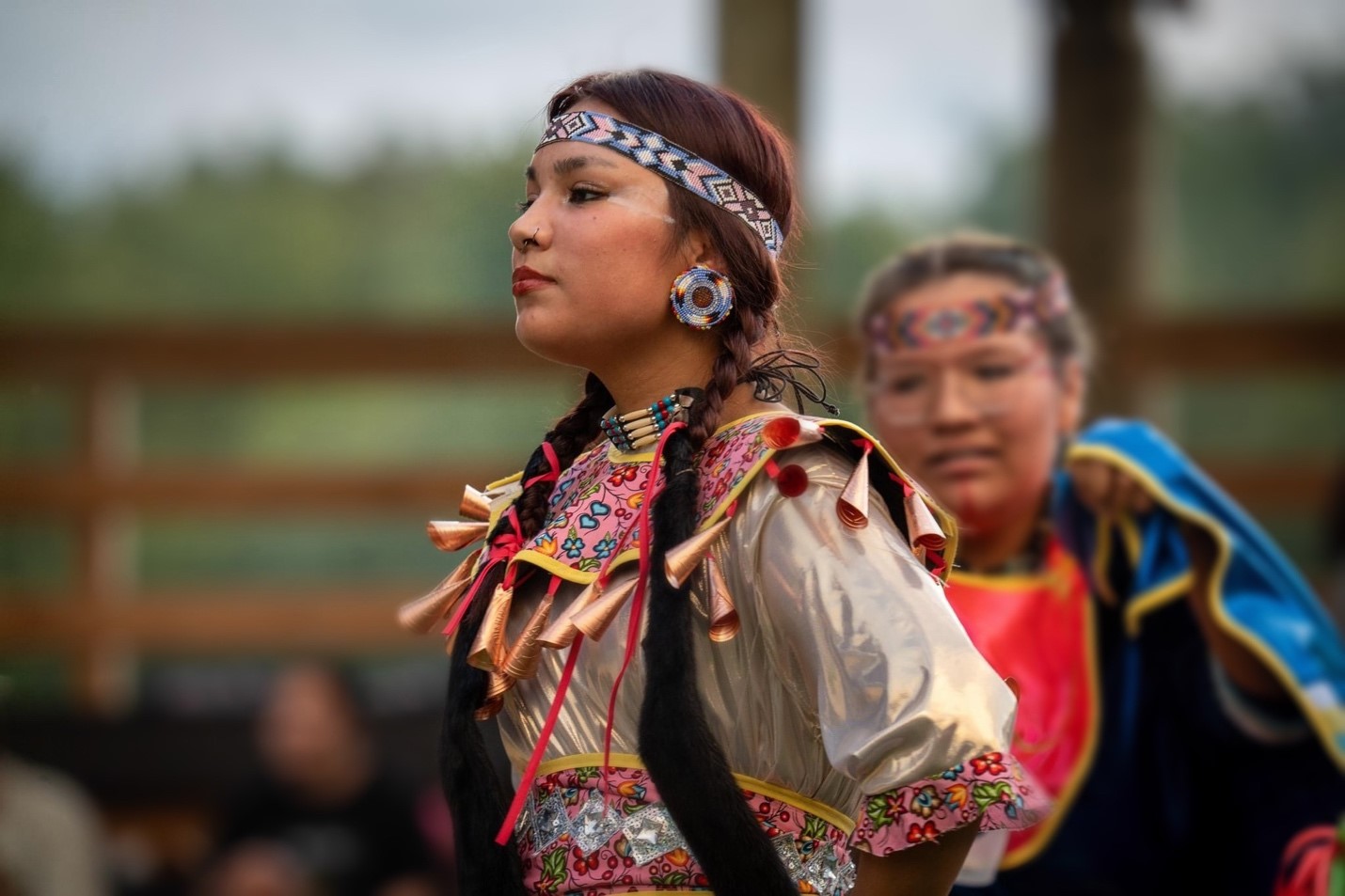
Shaylee Cook is a third year student at the University of Winnipeg studying psychology. She is from Brokenhead Ojibway Nation and is very passionate about learning and understanding from both the land and the people she meets along the way.
Kakeka Thundersky is a young Anishinaabkwe with roots in Poplar River First Nation, Treaty 5 Territory. She is a former kid in care, born and raised in Winnipeg, Manitoba. Kakeka is a dedicated mother of two beautiful girls, a passionate land and water defender, grassroots community organizer, and a member of the Thunderbird clan. Kakeka has been organizing in the community since the age of 14, and has been public speaking since eight years old. She believes direct action rooted in ceremony is crucial to defend the land, water, and sky from further decreation. Kakeka is the Northern and Rural Engagement Coordinator for Climate Action Team Manitoba and sits on the Steering Committee for 8th Fire Rising. Outside of work, Kakeka enjoys going to the library, sewing, ice skating, going to ceremonies, and is learning how to skateboard alongside her daughters.
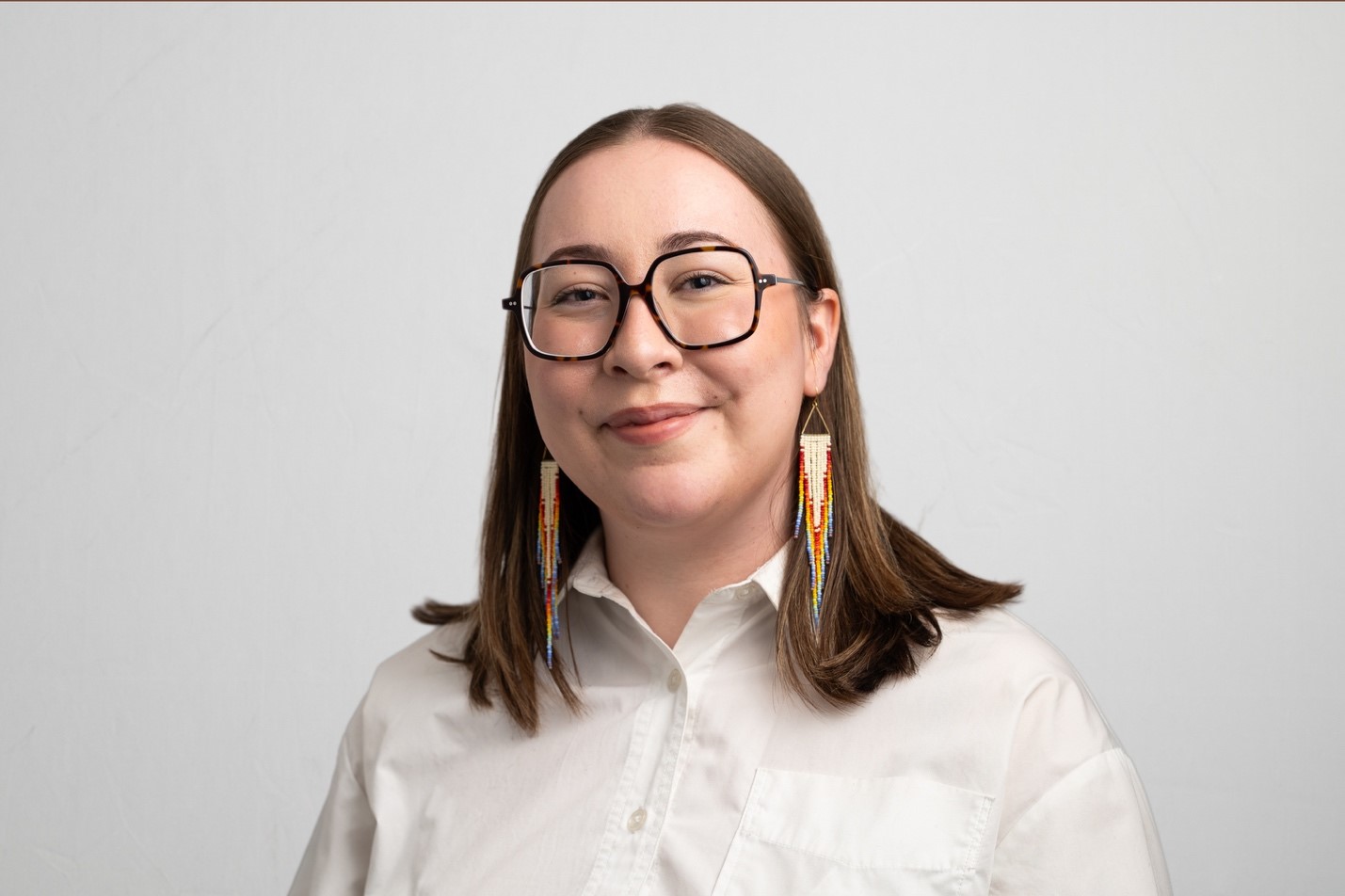
Jory Thomas is a Red River Métis Two-Spirit person with ties to the settlement of St. Norbert and Oak Lake/Pipestone, Manitoba. Raised in ceremony, she also carries the spirit name Stone Woman and the Bison Clan. Jory is a graduate from the Bachelor of Environmental Design program, with a specialization in Landscape Architecture and Urbanism. In fall 2026, Jory will attend McGill University as a McCall McBain Scholar, pursuing a Master’s in Urban Planning in the Faculty of Engineering. Jory is newly appointed to the Youth Advisory Council for the Manitoba Minister of Environment and Climate Change and remains actively committed to helping protect our planet through various initiatives. She hopes to be a planner, a designer, an educator, and a deadly elder in the future.
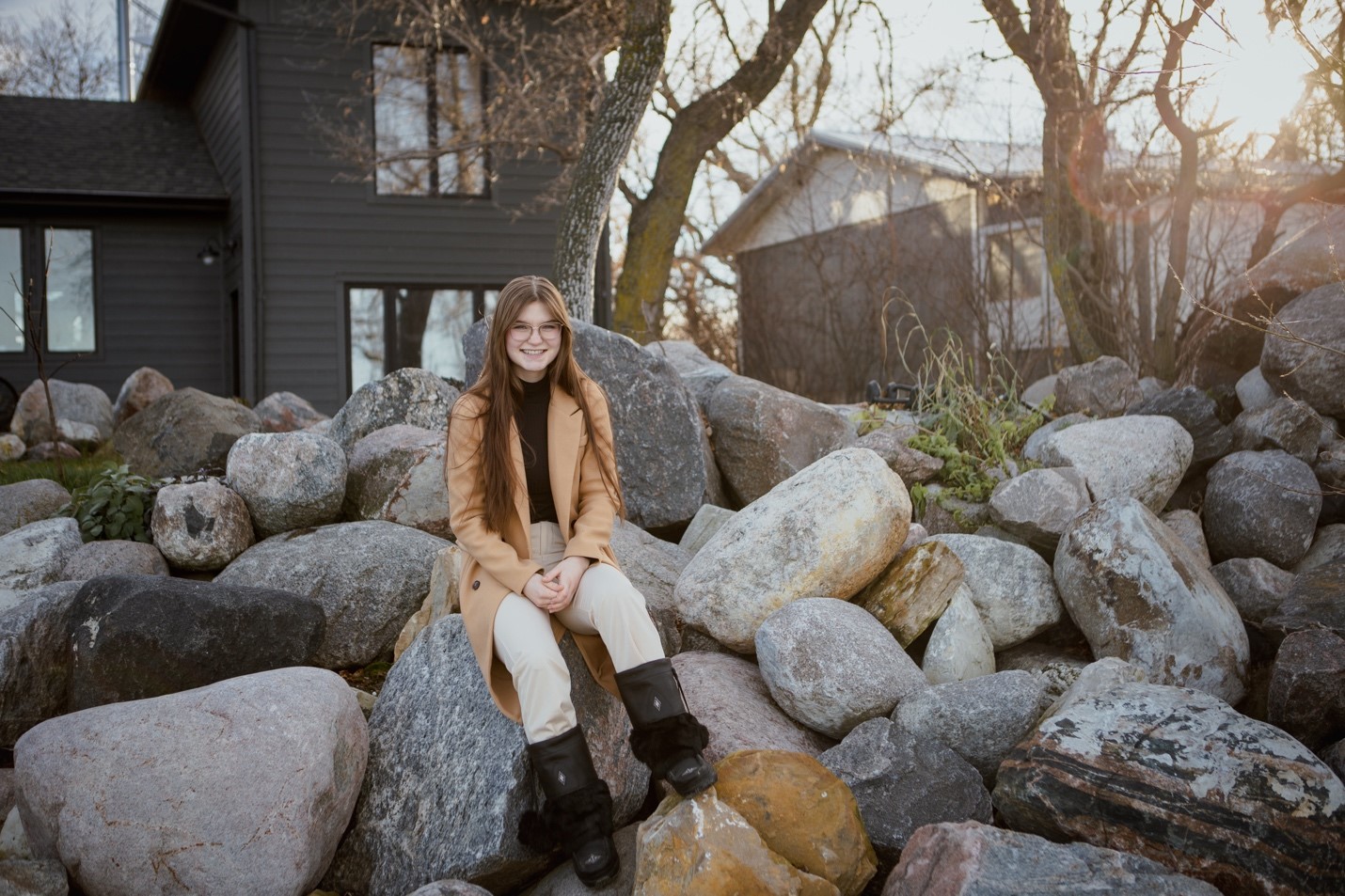
Jordan Thorsteinson, Nibi’Ikwe, belongs to the Turtle Clan. She is 21 years old and currently studying Environmental Science at the University of Manitoba. She wants to dedicate her life to protecting the land and water, and advocate for the original landkeepers of turtle island and those across the globe. Studying science has been a huge step for her, as her natural talents lie in creative pursuits such as dance, beading, arts, and singing. She hopes that by sharing, her journey can be a testament to others that a comfort zone is not the boundaries of one’s abilities, it is only the beginning. She had the wonderful opportunity to learn Anishinaabe from some amazing people and she’s excited to continue to learn to one day speak fluently. She does, however, speak English and French fluently, as she attended immersion schools before studying at the University. She likes to spend her free time hanging out with her roommates, friends and family, and of course doing some sort of arts.
Listening to Water:
Indigenous Knowledge, Youth Leadership, and the Future of Stewardship in a Changing Climate
Presenter: Justin R. Langan
This keynote will explore water not as a resource to be managed, but as a living relative that holds memory, identity, and responsibility. Grounded in Indigenous knowledge systems and lived experience, the session will examine how relationships with water have shaped communities over generations and how these relationships should guide our responses to current climate challenges.
Drawing from his work with Indigenous youth in rural, northern, and Arctic-connected communities, Justin’s keynote will highlight how young people are leading in water stewardship, climate resilience, and systems change. Their contributions often remain under-recognized in mainstream policy and decision-making spaces.
The keynote will bridge perspectives between Indigenous and Western knowledge systems, between generations, and between local experience and global climate discussions.
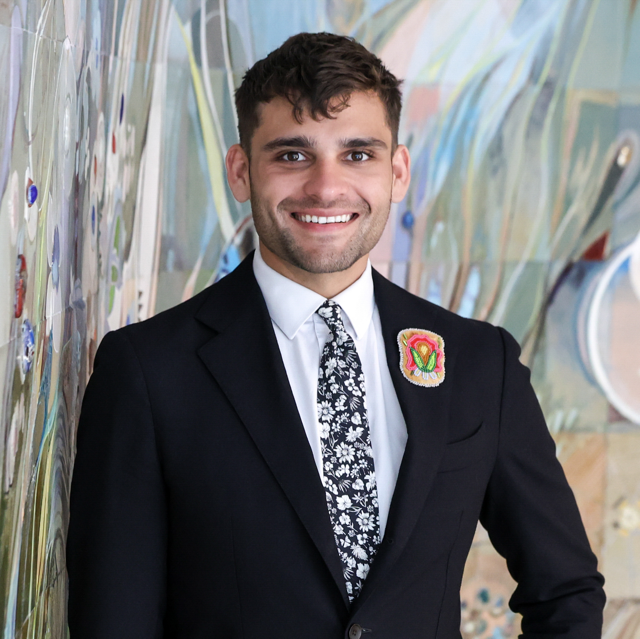
Justin R. Langan is a Métis youth leader from Manitoba and the Executive Director of O’KANATA, a nonprofit organization that empowers Indigenous youth through education, cultural revitalization, and sustainability. His work brings together Indigenous knowledge, digital innovation, and community-based climate action, with a focus on rural, northern, and underrepresented communities. Justin has led initiatives in eco-literacy, youth employment, and digital storytelling, and has shared his work at international forums including the World Economic Forum, Internet Corporation for Assigned Names and Numbers (ICANN) and Arctic policy dialogues. His work centres on creating pathways for Indigenous youth to lead in shaping more equitable and sustainable futures.
Honouring Knowledge, Upholding Respect:
A dialogue on creating space and pathways for respectful collaboration
This panel or armchair session will create a space for dialogue between Indigenous knowledge holders, including Elders and community members, and scientists/industry representatives. The goal is to strengthen mutual understanding, build respectful relationships, and support the development and application of best practices for practitioners engaging with Indigenous communities.
Panel Participants:
- Elder Laura Horton (Giniw’ikwe), Rainy River First Nations
- Kookum, Grandmother Sherry Copenace Niizhoosake, Saagimaakwe of the Atik dodem (Elk Clan), Assembly of Manitoba Chiefs Council of Elders
- Phoenix Combe, Policy Analyst, Energy Infrastructure & Resource Management, Manitoba Métis Federation
- Claire Herbert, Canadian Watershed Information Network Coordinator, University of Manitoba
- Danika Littlechild, Ermineskin Cree Nation (Neyâskweyâhk), Associate Professor, University of Winnipeg
Facilitator: Aimée Craft, Indigenous lawyer (Anishinaabe-Métis), academic, artist and change-maker
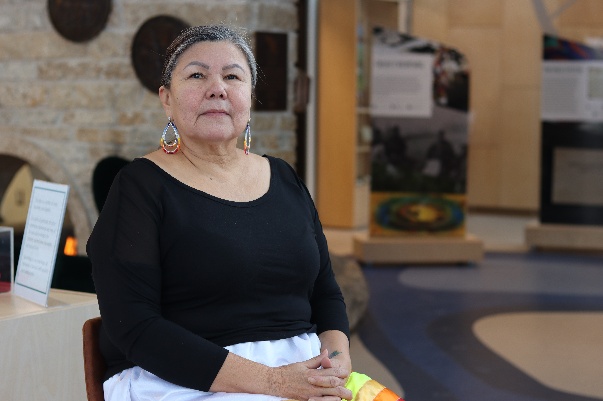
Giniwikwe, (Golden Eagle Woman), aka, Laura Horton is Tulita Dene Anishinaabekwe , and a community member of Manidoo Bawatigoong, Rainy River First Nations. She is bear clan, Mide’kwe, mom, kokum and great grandmother, born and raised in Treaty 3, Ontario, Canada. She retired from Seven Generations Education Institute in 2015 as Director of Post Secondary Education. She continues as to share teachings, mentor youth, and support traditional health practices as a Cedar Bath conductor, Water advocate, medicine harvester and lover of life.
Kookum, Grandmother Sherry Copenace Niizhoosake, Saagimaakwe of the Atik dodem (Elk Clan) is part of the Midewewin. Sherry was born and raised in the community of Ojibways of Onigaming in Northwestern, Ontario on the east side of Lake of the Woods. She is rooted in her Anishinaabe ways and fluent in Anishinaabemowin, her original language and has a great love for the Land, Waters and Peoples.
Since 2011, Sherry has led Makoosekawin- Anishinaabe young women coming of age teachings and ceremonies. She is part of a Knowledge Circle at Nanadawegamig (FMHSSM). Sherry helps at Anishinaabe Teaching and Sacred Lodges such as the Annual Nibi Gathering held in May of each year. She holds a MSW degree and is associated with several institutions and organizations who continually engage her for her knowledge and lived experience. Sherry is the Treaty 3 representative of the AMC Council of Elders, Grandmother’s Council and to the Treaty Relations Commission of Manitoba and has assisted with the Full moon & Water Ceremonies, Women’s Gathering and guidance to the Grand Chief’s office.
Phoenix Combe is a Policy Analyst with the Manitoba Métis Federation’s Energy, Infrastructure, and Resource Management Department. A proud Red River Métis woman born and raised in Winnipeg, Manitoba, Phoenix works to advance Red River Métis governance, data sovereignty, and environmental stewardship across the Nation’s Homeland. Her work focuses on Indigenous-led data practices, watershed and ecological monitoring, and supporting rights-based decision-making grounded in Métis knowledge systems. Phoenix is committed to ensuring that Red River Métis voices, knowledge, and responsibilities guide land and water decisions now and for future generations.
Danika Littlechild is a registered member of Ermineskin Cree Nation located in Treaty 6 territory in the province of Alberta. She joined the University of Winnipeg as an Associate Professor in Fall 2024. Before that, she was an Assistant Professor at Carleton University in the Department of Law and Legal Studies from 2020-2024. Danika practiced law from 2000-2020, working extensively on Indigenous and environmental matters in Canada and internationally. Danika participated in the negotiations of the Sustainable Development Goals, the Minimata Convention on Mercury and many United Nations special procedures, conference of the parties and related meetings to multilateral environmental agreements such as the Stockholm Convention on Toxics. Domestically, Danika developed a law practice and now, a research portfolio that is focused on conservation and protected areas, water, and climate change. She served as an advisor for many years to the Assembly of First Nations on water and environmental issues, she was a member of the Global Water Institute at Carleton University. Danika was the Co-Chair of the Indigenous Circle of Experts who developed the designation of IPCAs, or Indigenous Protected and Conserved Areas in Canada. She is co-author of the Indigenous Resilience Report on Climate Change (2025) a four year national academic study on the area. Currently, Danika is the Co-Principal Investigator of the Arramat Project, a NFRF Transformation $24M global project working on Biodiversity, Conservation and Indigenous Health & Well Being. Danika is a member of Manitoba’s Clean Environment Commission. Danika holds a UNESCO Chair in Collaboration for Biodiversity Conservation and Indigenous Health and Well-being.
Claire Herbert is a freshwater biogeographer and data scientist based at the University of Manitoba’s Centre for Earth Observation Science in Winnipeg, where she coordinates the Manitoba Great Lakes Program and leads digital and data strategy for the Canadian Watershed Information Network (CanWIN). With more than two decades of experience in lake biology, ecological dataset management, and climate‑change impacts on freshwater systems, her work focuses on turning complex limnological data into accessible tools for communities, decision‑makers, and researchers in the Lake Winnipeg basin and beyond. Claire serves as co‑chair of the University of Manitoba’s United Nations Academic Impact Hub for Sustainable Development Goal 6 (Clean Water and Sanitation), where she collaborates with local and global partners to advance Indigenous‑led water governance, community‑based monitoring, and SDG‑aligned education and outreach, including representing UM at the UN 2023 Water Conference in New York. Through projects with First Nations, the Manitoba Métis Federation, and others, she co‑develops scalable monitoring kits, data‑sharing frameworks, and knowledge‑mobilization products that support water justice, Indigenous data sovereignty, and climate‑resilient freshwater stewardship.